
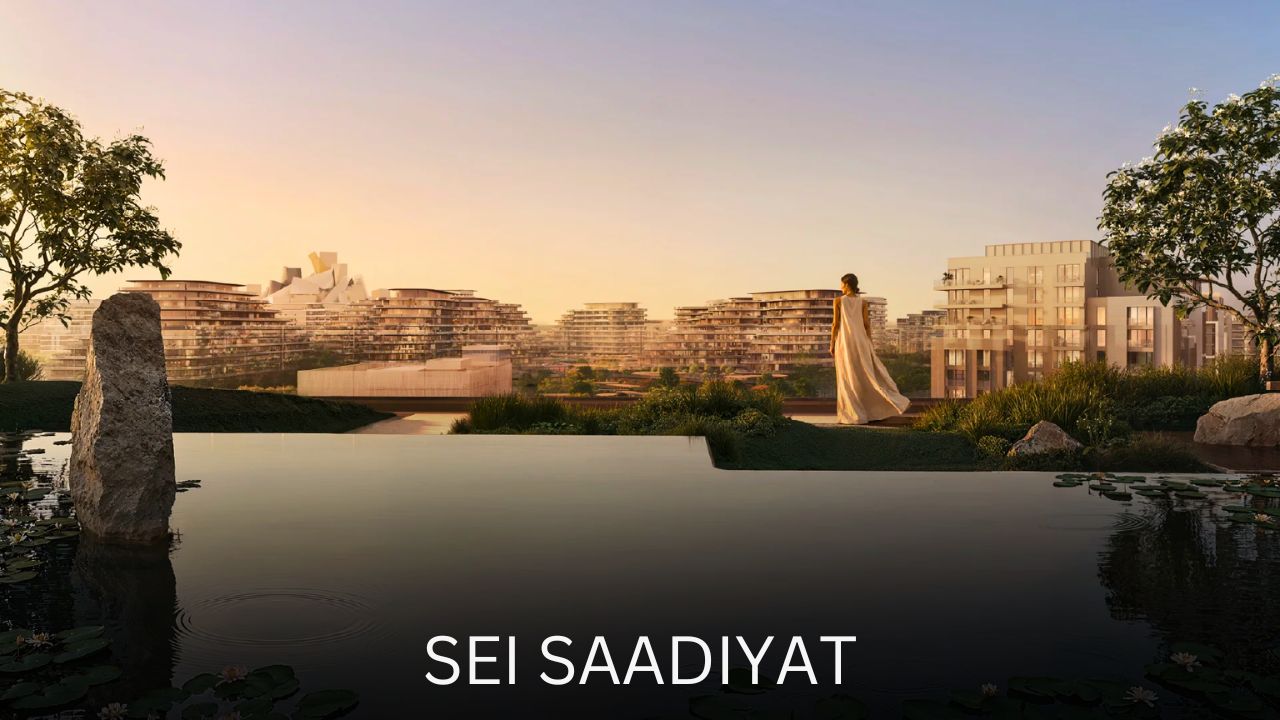
Sei Saadiyat
1–2 Bedroom Apartments, 2 Bedroom Kanso Lofts & 3 Bedroom Kanso Residences at Sei Saadiyat by Aldar Sei Saadiyat by

Abu Dhabi’s real estate story is becoming increasingly difficult to describe as simply “growing.”
The Abu Dhabi Real Estate Centre (ADREC) H1 2026 Market Report shows a market expanding in transaction value, international participation, off-plan demand, rental activity and future development at the same time.
During the first six months of 2026, Abu Dhabi recorded AED 117 billion in total real estate transactions, representing a 112% year-on-year increase. Residential unit sales alone reached approximately AED 70.4 billion, nearly three times the level recorded during the same period a year earlier.
But for Royal Lounge Properties, the most interesting part of the report is not simply how much property was sold.
It is who is buying, what they are buying, and where Abu Dhabi’s next generation of supply is being created.
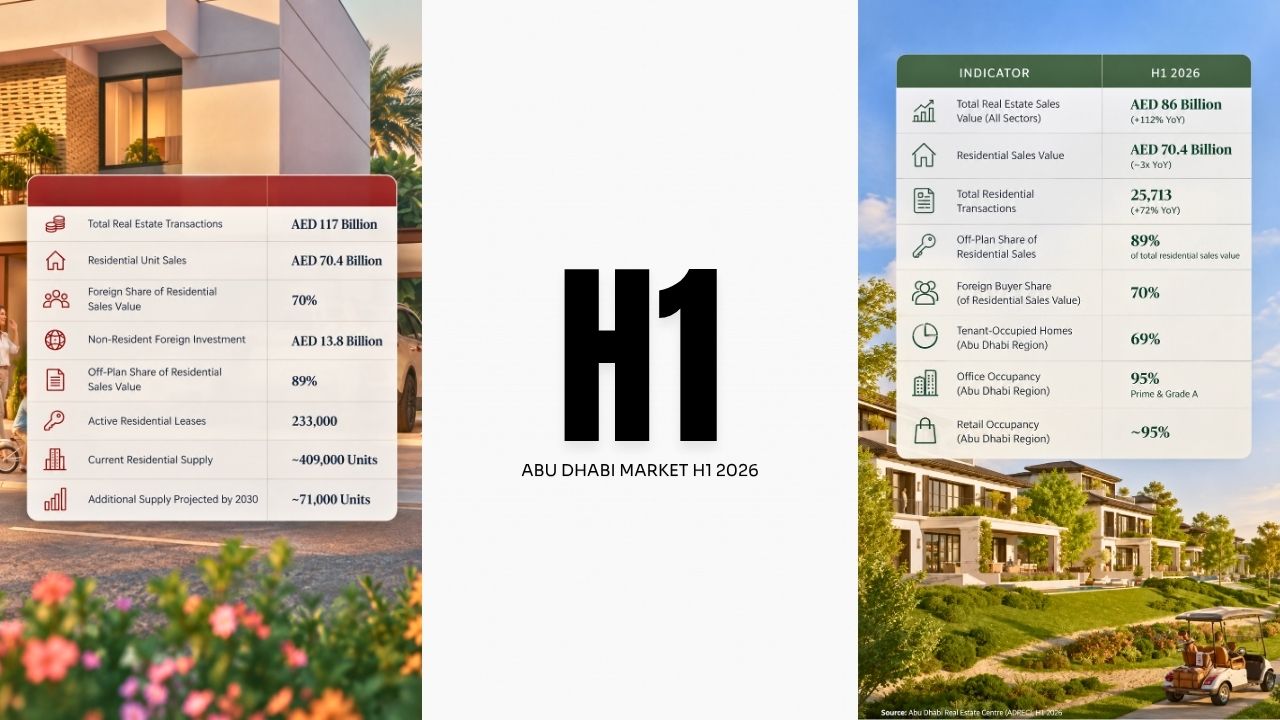
| Market Indicator | H1 2026 |
|---|---|
| Total Real Estate Transactions | AED 117 Billion |
| Residential Unit Sales | AED 70.4 Billion |
| Foreign Share of Residential Sales Value | 70% |
| Non-Resident Foreign Investment | AED 13.8 Billion |
| Off-Plan Share of Residential Sales Value | 89% |
| Active Residential Leases | 233,000 |
| Current Residential Supply | ~409,000 Units |
| Additional Supply Projected by 2030 | ~71,000 Units |
The combination is important. Abu Dhabi is not experiencing growth from one isolated part of the market. Sales, international investment, leasing and development activity are moving together.
Perhaps the clearest indication of the market’s acceleration is the overall transaction figure.
Abu Dhabi recorded AED 117 billion in real estate transaction value during H1 2026, up 112% year-on-year. Real estate sales represented AED 86 billion of that activity, with residential units accounting for the majority of sales growth.
Residential sales reached AED 70.4 billion, compared with AED 25.3 billion in H1 2025. Importantly, ADREC notes that sales value increased faster than transaction volumes, supported by price growth and a greater share of higher-end properties.
This points towards something deeper than simply “more transactions.” Abu Dhabi is increasingly attracting capital into premium residential products, destination communities and large-scale masterplans.
One of the strongest signals in the entire report comes from international participation.
More than 70% of residential sales value during H1 2026 came from resident expatriates and non-resident foreign investors. Resident foreign buyers accounted for approximately AED 35.6 billion, while non-resident foreign investment reached AED 13.8 billion.
That AED 13.8 billion in non-resident investment was approximately four times higher year-on-year. Buyers were also geographically diverse, with the report recording non-resident investors from 116 nationalities.
This is one of the most important changes taking place in Abu Dhabi real estate.
The emirate is increasingly competing for international capital alongside established global property destinations. Investors are looking at Abu Dhabi not only for taxation advantages or potential appreciation, but also for the quality of its developers, infrastructure, regulation, waterfront lifestyle and long-term masterplanning.
Where international buyers are putting their money is equally revealing.
ADREC identifies Saadiyat Island and Hudayriyat Island as leading destinations for foreign direct investment, while expatriate residents are active across all ten of the leading residential sales districts. ADGM, which includes Al Reem and Al Maryah Islands in the report’s analysis, and Al Raha show particularly strong concentrations of resident expatriate investment.
These locations share several characteristics. They are increasingly connected, lifestyle-oriented and supported by significant infrastructure, while many offer waterfront positioning or access to major cultural, leisure and employment destinations.
That is why analysing Abu Dhabi real estate purely by individual project can sometimes miss the bigger opportunity. Investors should also understand how an entire district is evolving around the property they are considering.
The scale of off-plan activity is perhaps the most striking structural change.
According to ADREC, 89% of residential sales value and 82% of transactions in H1 2026 were off-plan. Off-plan apartment sales value increased 220% year-on-year, while off-plan villa and townhouse sales value increased 289%.
Four locations accounted for 84% of off-plan apartment sales: Saadiyat Island, ADGM including Al Reem and Al Maryah Islands, Yas Island and Fahid Island.
For villas and townhouses, seven projects generated 65% of off-plan sales value, including Al Naseem, Nawayef West, Nawayef East, Ramhan Island, Bashayer Villas, SHA Residences and Bayn.
This concentration tells investors something important. Capital is not moving randomly across Abu Dhabi. It is increasingly following major developers, masterplanned destinations and locations benefiting from long-term infrastructure investment.
Look at Abu Dhabi’s development map and a pattern begins to emerge.
Saadiyat Island, Yas Island, Reem Island, Hudayriyat Island, Fahid Island, Jubail Island and Ramhan Island are increasingly forming a network of distinct residential and lifestyle destinations, each serving a different buyer profile.
Saadiyat is developing around culture, beaches and ultra-prime living. Yas combines residential communities with tourism and entertainment. Reem and Maryah form an increasingly important residential, financial and commercial cluster. Hudayriyat is emerging as a major new lifestyle and residential destination, while Fahid, Jubail and Ramhan add further waterfront and low-density opportunities.
The numbers support this direction. ADREC projects that 77% of Abu Dhabi Region’s incremental residential supply through 2030 will be concentrated in six districts: Saadiyat Island, Reem Island, Yas Island, Zayed City, Khalifa City and Hudayriyat Island.
Rapid sales growth naturally raises another question: what happens when new supply arrives?
ADREC projects approximately 67,500 additional residential units in Abu Dhabi Region between H2 2026 and 2030, representing projected annual supply growth of around 4.6%. Approximately 62,500 of those units are expected within investment zones.
This is where investors need to become more selective.
More supply does not automatically mean weaker investment performance, particularly when population, employment, tourism and international capital are also expanding. But it does mean that simply buying “an Abu Dhabi property” is no longer enough of a strategy.
Investors should understand future supply within the specific district, the developer’s track record, unit type, entry price, surrounding infrastructure, competing projects and the likely end-user or tenant profile.
At Royal Lounge Properties, we believe the H1 2026 figures demonstrate that Abu Dhabi has entered a more sophisticated stage of its property cycle.
The conversation is no longer simply about whether Abu Dhabi real estate will grow. AED 117 billion in transactions, AED 70.4 billion in residential sales and 70% foreign participation already demonstrate the scale of demand.
The more important question for investors is now: where within that growth should capital be positioned?
Not every new launch will benefit equally from Abu Dhabi’s expansion. Investors need to understand infrastructure, future supply, developer strength, waterfront scarcity, employment centres, tourism drivers, community maturity and the type of buyer or tenant likely to want that property several years from now.
There is also a significant difference between following demand and anticipating it. Saadiyat, Yas, Reem, Hudayriyat, Fahid and other emerging destinations are receiving billions of dirhams in development and infrastructure investment. Understanding how those destinations will function when today’s masterplans become tomorrow’s communities can help investors make more informed decisions.
Perhaps the strongest message from the ADREC report is that today’s transaction growth sits inside a much larger transformation.
Abu Dhabi currently has approximately 409,000 residential units, with close to 71,000 additional homes projected across the emirate by 2030. ADREC expects development activity to accelerate after 2027, with the largest delivery period currently projected for 2028.
At the same time, the emirate is attracting international investors, expanding investment zones, creating new waterfront destinations and supporting growth with infrastructure, tourism, culture, education and commercial development.
For buyers, the opportunity is therefore becoming more nuanced.
The next phase of Abu Dhabi real estate may not simply reward those who buy early. It may reward those who understand where Abu Dhabi is going before that direction becomes obvious.
1–2 Bedroom Apartments, 2 Bedroom Kanso Lofts & 3 Bedroom Kanso Residences at Sei Saadiyat by Aldar Sei Saadiyat by
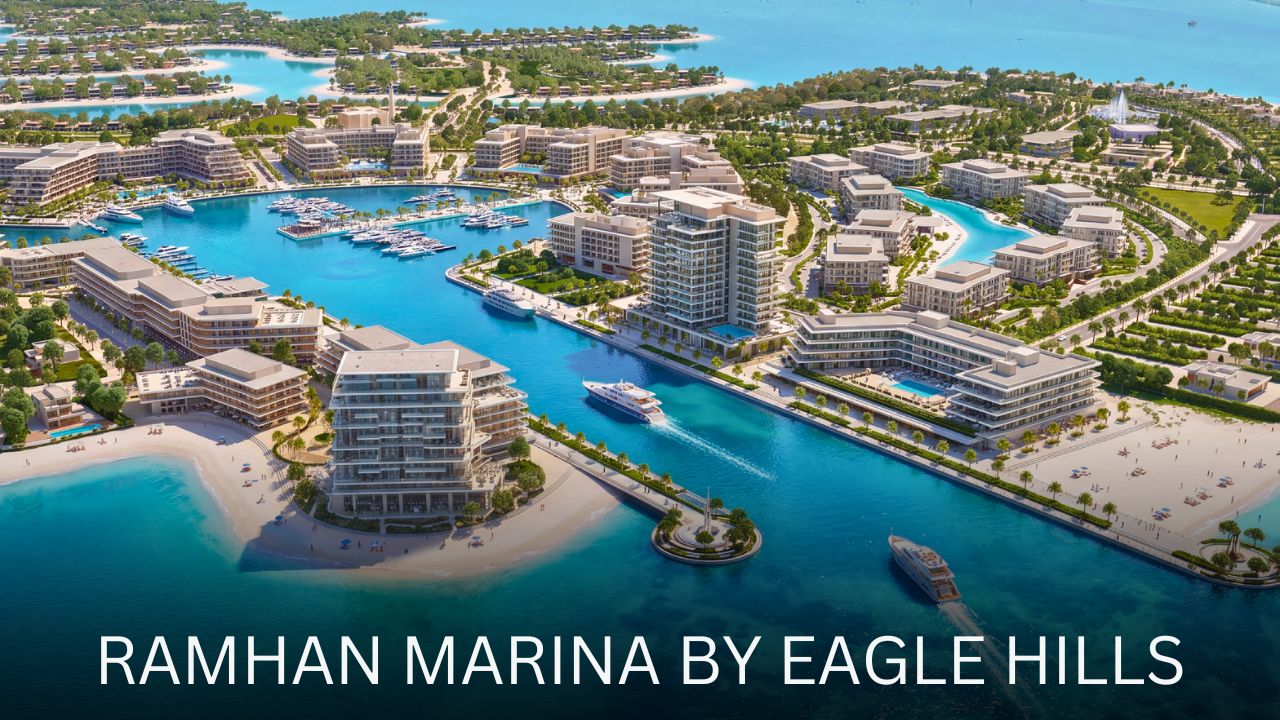
1–3 Bedroom Waterfront Apartments at Ramhan Marina by Eagle Hills, Ramhan Island Abu Dhabi Ramhan Marina by Eagle Hills Ramhan
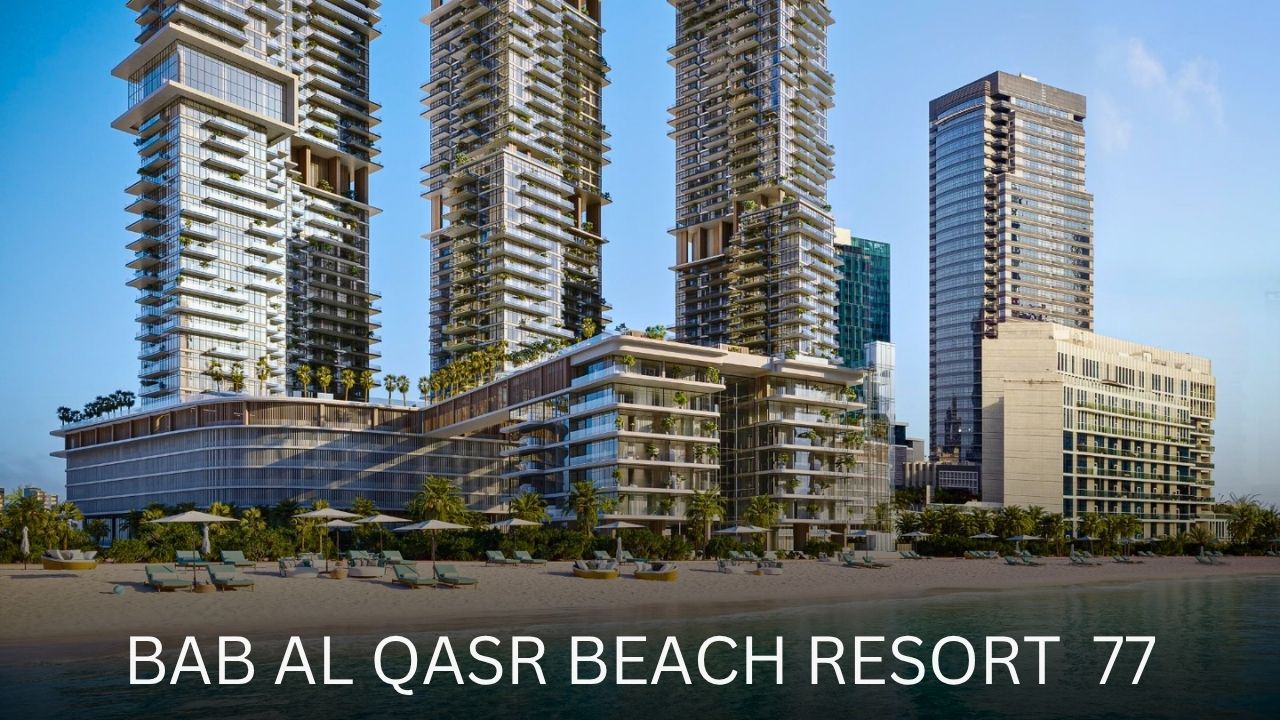
1–5 Bedroom Fully Furnished Beachfront Residences at Bab Al Qasr Beach Resort Residence 77, Al Reem Island Abu Dhabi Bab