

The Artery Residences
Studios, 1–4 Bedroom Apartments and Exclusive Duplexes at The Artery Residences, Al Reem Island Abu Dhabi The Artery Residences The

The global oil market is one of the most important parts of the world economy. Many countries depend on oil for income, and changes in oil prices affect everything from fuel costs to business growth. To manage this, some of the world’s biggest oil-producing countries created a group called OPEC. Over time, this group expanded into a larger alliance known as OPEC+. Recently, the United Arab Emirates decided to leave this alliance, and that decision has raised many questions.
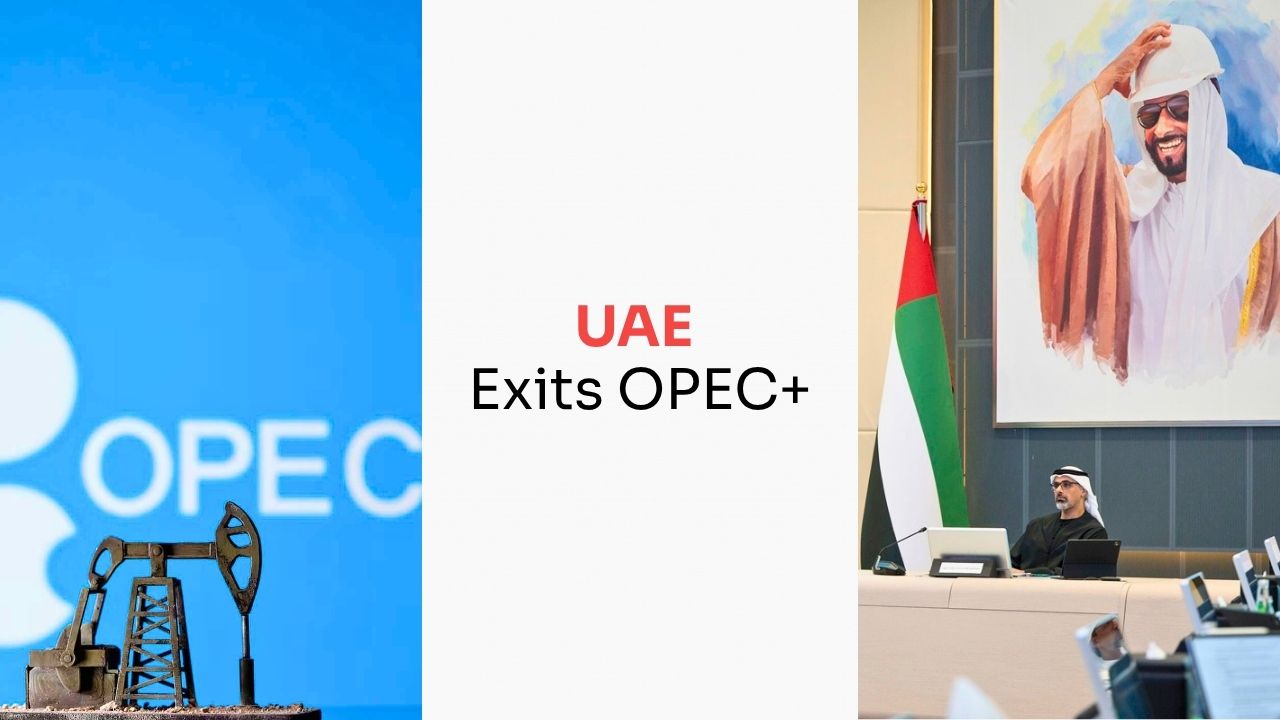
OPEC was formed in 1960 by five countries, Iran, Iraq, Kuwait, Saudi Arabia, and Venezuela. The main idea behind creating OPEC was to protect the interests of oil-exporting countries. Before OPEC, oil prices were mostly controlled by large international companies, and producing countries had limited control over their own resources.
OPEC changed that. It gave these countries a way to work together and decide how much oil to produce. By controlling supply, they could influence global oil prices and make sure they earned stable income. Over time, more countries joined OPEC, including Algeria, Libya, Nigeria, and others, making it a powerful group in the energy market.
In 2016, oil prices dropped sharply, and OPEC alone was not strong enough to stabilize the market. To solve this, OPEC partnered with other major oil-producing countries like Russia. This new alliance became known as OPEC+.
OPEC+ is simply a larger group that includes OPEC members plus additional producers. The goal is the same, to control oil supply and keep prices stable, but with more countries involved, the group has stronger influence over the global market.
OPEC’s main role is to manage oil supply. When the group decides to increase production, more oil enters the market, which can lower prices. When it reduces production, supply becomes limited, which usually pushes prices higher.
This system has been used many times in history. During the COVID-19 pandemic, when global demand for oil dropped, OPEC+ reduced production to prevent prices from collapsing. In earlier events like the 1973 oil crisis, supply cuts caused oil prices to rise sharply and impacted economies around the world.
However, OPEC does not always work perfectly. One common issue is that some countries do not strictly follow production limits. They may produce more oil to increase their own income, which weakens the group’s overall control.
The UAE has been a key member of OPEC for decades. It joined in 1967 and became one of the group’s most important oil producers. By 2025, the UAE was producing around 3.1 million barrels of oil per day, making it one of the top producers in the organization.
The country is also one of the world’s leading oil exporters, ranking just behind major players like Saudi Arabia and Iraq. Another important strength of the UAE is its spare production capacity, which means it can quickly increase output when needed.
The UAE’s decision to leave OPEC+ in 2026 was not sudden. It was based on long-term planning and a careful review of its future goals.
One of the main reasons is control over production. Inside OPEC, countries must follow production quotas. These limits are designed to manage global supply, but they also restrict how much a country can produce. The UAE wants more freedom to decide its own production levels based on its capacity and market conditions.
Another key reason is growth. The UAE plans to increase its oil production capacity to around 5 million barrels per day by 2027. Achieving this target is easier without OPEC restrictions. By leaving the group, the UAE can expand production at its own pace.
Flexibility is also a major factor. OPEC decisions require agreement from multiple countries, which can slow down responses to market changes. Outside the group, the UAE can act quickly and adjust supply based on real-time demand.
There are also broader economic reasons. The UAE is no longer fully dependent on oil. About 75 percent of its economy now comes from non-oil sectors such as tourism, finance, and technology. This shift allows the country to focus on long-term growth rather than just oil price control.
Political and regional differences have also played a role. Over time, the UAE has taken independent positions on regional issues and expanded its global partnerships. Leaving OPEC allows it to follow its own strategy without being tied to group decisions.
Leaving OPEC gives the UAE several clear advantages. The most important benefit is full control over oil production. The country can now produce as much oil as it wants, without being limited by quotas. This opens the door for higher output and potentially higher revenue.
Another benefit is faster decision-making. Without needing approval from other countries, the UAE can respond quickly to market changes. This is especially important in a global market where prices can change rapidly.
The move also supports the UAE’s long-term strategy. The country is investing heavily in renewable energy and other industries. By controlling its own oil policy, it can balance traditional energy production with future-focused investments.
Finally, leaving OPEC strengthens the UAE’s independence. It allows the country to act based on its own interests rather than group agreements.
In the short term, experts believe the impact will be limited. Even though the UAE is a major producer, global oil supply depends on many countries. Current global conditions, including supply disruptions and shipping challenges, already have a bigger effect on prices.
However, in the long term, the UAE’s ability to increase production could influence the market. If it produces significantly more oil, it could add to global supply and affect pricing trends.
OPEC and OPEC+ have played a major role in shaping the global oil market for decades. They helped countries work together to manage supply and stabilize prices. But the UAE’s decision to leave shows a shift toward independence and future planning.
This move is not about leaving the market. It is about gaining more control, increasing flexibility, and preparing for long-term growth. The UAE remains a strong global energy player, and its strategy shows confidence in its ability to manage its own path.
In simple terms, the UAE is moving from a group-controlled system to a self-controlled approach, focusing on growth, flexibility, and the future.
Studios, 1–4 Bedroom Apartments and Exclusive Duplexes at The Artery Residences, Al Reem Island Abu Dhabi The Artery Residences The

Studios, 1–3 Bedroom Apartments with Maids Room A New Waterfront Address Is Coming to Yas Island The Canopies at Yas

Studios, 1–4 Bedroom Apartments and Duplex Homes at Radiant Terrace, Al Reem Island Abu Dhabi Radiant Terrace Al Reem Island